
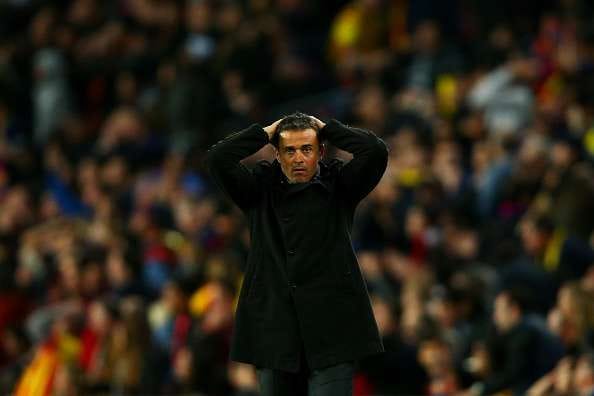
So ends another managerial era at Barcelona as Luis Enrique stepped down following his final game in charge of the club. A Copa del Rey triumph may have seen him end the season with a smile but the turmoil surrounding him in the months prior had done enough to add a few wrinkles to his face and grey his hair. After a treble-winning campaign in his debut season (2014/15), just a solitary cup
triumph in his final season saw the curtains come down in rather underwhelming fashion – failing to win La Liga and getting knocked out in the Champions League quarter-finals.
Enrique has been loved and criticised in equal measure but he took great pride in his own work, even announcing his departure before he was asked to leave. So where did it all go wrong for Lucho this season?
1) Not adequately replacing Dani Alves
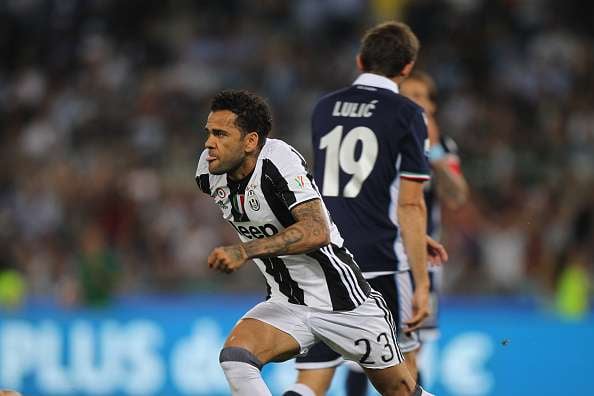
If everything went according to plan, Dani Alves would have stayed at the Camp Nou until the end of his contract which ran until June 2017. Instead, Alves was allowed to leave for free in the summer of 2016 in spite of having signed a two-year extension in 2015.To describe his Camp Nou exit as acrimonious would be an understatement. The Brazilian full-back accused the club’s hierarchy of disrespecting him and being “extremely false and ungrateful”.
He pointed out that they did not give his future at the club the attention it deserved until the FIFA transfer ban made retaining players a high priority.“I was only offered a new deal when the FIFA transfer ban came in.
That was when I played them at their own game and signed a deal with a termination clause.” – AlvesJuventus were only too glad to take him on for free and he is now a trophy away from winning yet another treble, playing a starring role in the UCL semi-finals.
Meanwhile, Barcelona have struggled in both attack and defence without a decent full-back on the right. Aleix Vidal was never a like-for-like replacement and initially failed to make a positive impact. And just when he started to come good for Enrique, a horrific ankle injury sidelined him.
The versatile Sergi Roberto has been deployed as a right-back at times while Enrique has also frequently changed the system to use a wing-back instead. There was no succession plan in place following Alves’ exit and Enrique had to do with what he had which was simply not good enough at a top club such as Barcelona.
2) Playing a 3-man defence without the correct personnel
There were times when Enrique played a back-three, especially when they desperately needed a result. The remarkable comeback against Paris Saint-Germain comes to mind when Enrique gambled with a very unorthodox 3-1-4-2 and eventually won.
However, there were games when he played a 3-3-1-3. This was a formation that exposed the Catalan club defensively, especially on a wide pitch such as the Camp Nou. Width became the formation’s biggest enemy and to counter that Enrique deployed the wrong players to make up for it. Take the Valencia game for example.
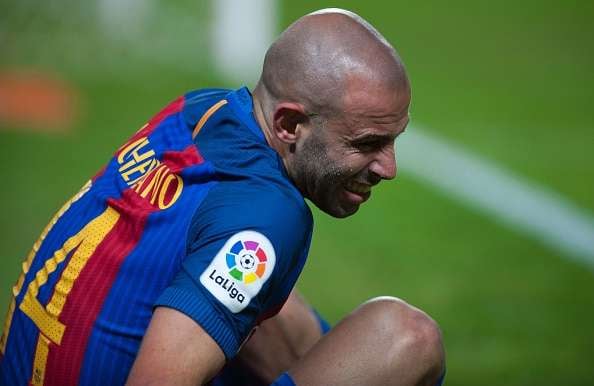
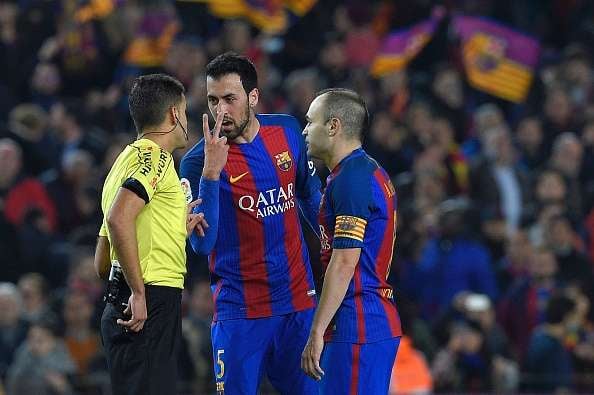
With Sergio Busquets all on his own in central midfield, Andres Iniesta and Rafinha were forced to play in wide roles – hardly the players you would expect to provide defensive solidity when they lose the ball. As a result, the likes of Javier Mascherano in defence were exposed and he was always in two minds whether to sit back and give opponents space or step up and leave space behind him for opponents to run into. Jeremy Mathieu was also another player who struggled in a back-three. Both defenders are in their 30s and will most likely not have a future at the club.
3) Inability to get the best out of Ivan Rakitic
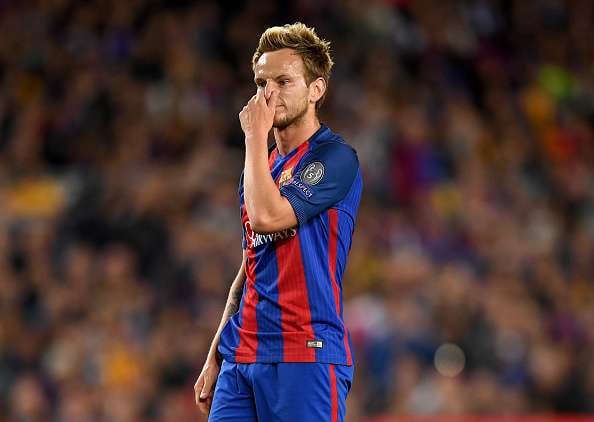
When Ivan Rakitic arrived at the club, he had a wonderful first season and was instrumental in the treble-winning campaign. Xavi was benched to give way to a more direct approach and Rakitic thrived in midfield as possession football gave way to transition football. That season saw Lionel Messi, Luis Suarez and Neymar form the three-pronged attack that plundered 122 goals and 66 assists.
However, Messi's role has evolved slightly over the years and he now moves into a central role to effect play. What it did was to minimise the right midfielder’s role – effectively robbing Rakitic of space to make a difference in the game.
The Croatian was quite literally on Messi’s heels and was forced to cover for him by going wide when Messi drifted inside to work with Suarez.
When Ivan Rakitic arrived at the club, he had a wonderful first season and was instrumental in the treble-winning campaign. Xavi was benched to give way to a more direct approach and Rakitic thrived in midfield as possession football gave way to transition football.
That season saw Lionel Messi, Luis Suarez and Neymar form the three-pronged attack that plundered 122 goals and 66 assists. However, Messi's role has evolved slightly over the years and he now moves into a central role to effect play.
What it did was to minimise the right midfielder’s role – effectively robbing Rakitic of space to make a difference in the game. The Croatian was quite literally on Messi’s heels and was forced to cover for him by going wide when Messi drifted inside to work with Suarez.
As a result, Rakitic became a peripheral figure. How many times have we seen the playmaker’s abilities wasted because he was forced to play out wide? Rakitic’s heat maps from 2014/15 to 2016/17 also show how his position has shifted. And he was clearly struggling in a few games following his Achilles tendon injury.
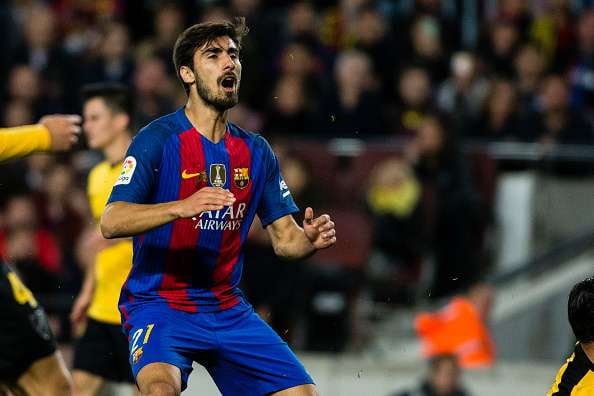
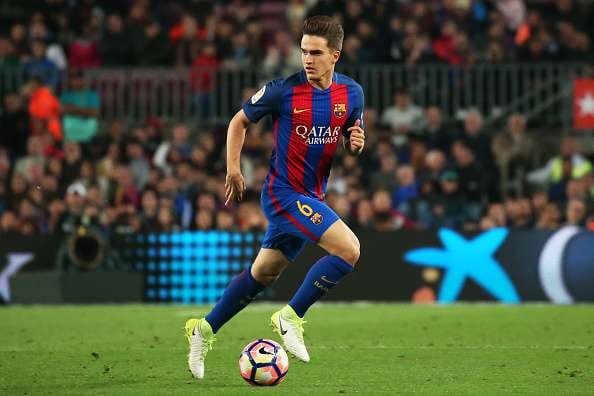
4) Barcelona’s midfield tactics – or the lack of them
Tags
LATEST